
Owner Guides
Water safety: the risks a water dog will never notice
A Toller will swim until something stops him, and he will not be the one to decide what that something is. The hazards that actually put swimming dogs in trouble — cold, current, what is in the water, and sheer enthusiasm — are all invisible to the dog. Noticing them is the job, and it is entirely yours.
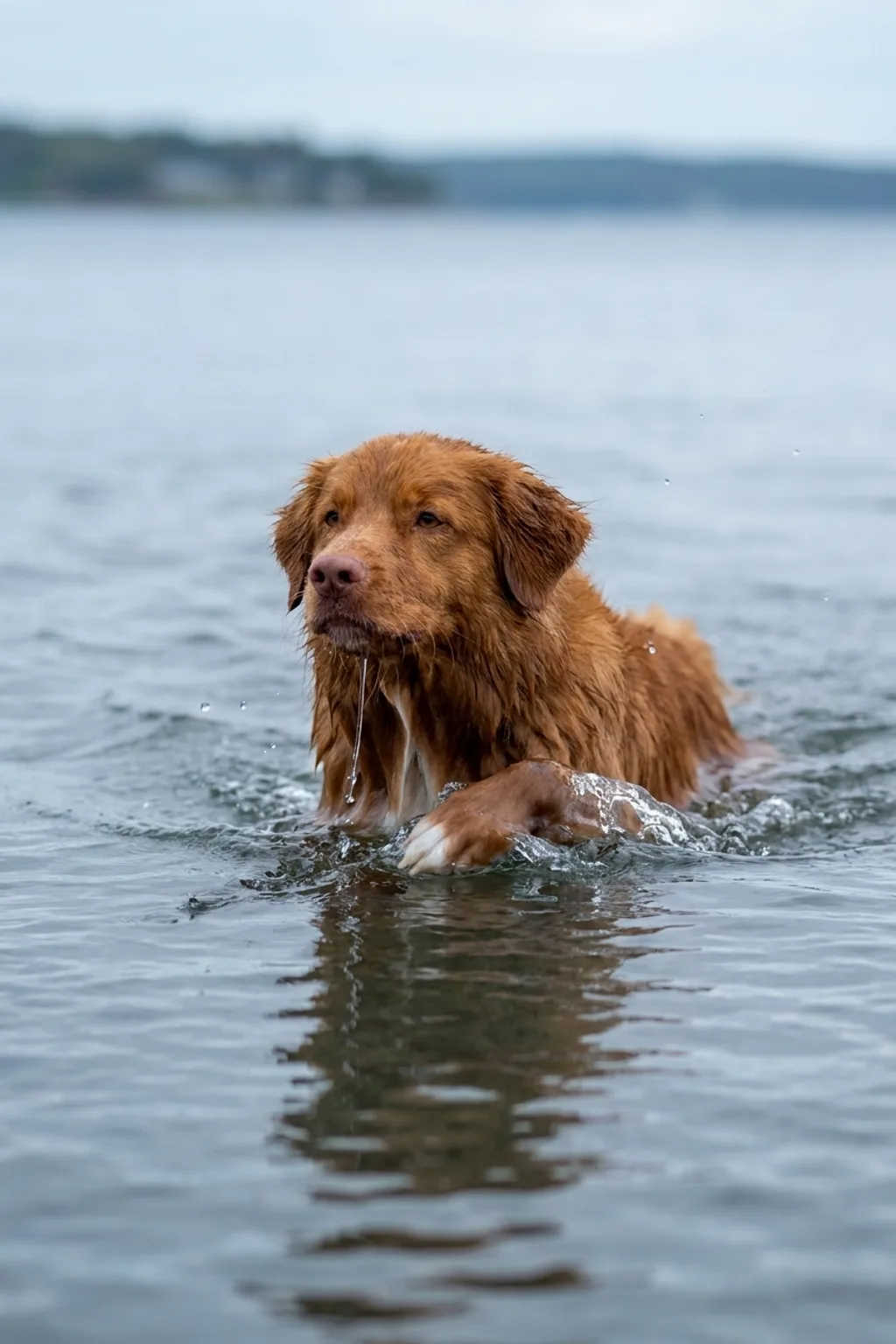
- Cold water tires a dog far faster than cold air
- Know the tide and current before he does
- Scummy, still, warm fresh water — stay out
- Take breaks: he will not stop on his own
The short version
Swim in water you have assessed rather than water you have found: a gradual entry, an obvious exit, no current you cannot see the end of, and nothing floating on the surface that should not be there. Keep sessions short, especially in cold water. Build in breaks during retrieving so he is not swallowing water for an hour. Rinse and dry him afterwards, ears included. And fit a life jacket any time you are on a boat, in open water, or dealing with current.
Almost every genuinely bad outcome with a swimming dog comes from one of five things: cold, current, contaminated water, exhaustion, or swallowing too much water. None of them look dangerous to a dog having the time of his life.
Why this breed in particular
Tollers were built for cold water and long days in it, which makes them superb swimmers and terrible judges of when to stop. The drive outlasts the body. A dog who is tiring will often keep retrieving anyway, so the limit has to be set by you, in advance, out loud.
Can every dog swim?
The short answer is no — and the longer answer matters.
Built for it, not born knowing it
Webbed feet, a water-repellent double coat and a strong tail make a Toller an excellent swimmer. But swimming confidently is still a learned experience, and a frightening first encounter can last a lifetime — which is why the first swim is worth getting right.
Fitness is not the same as drive
Puppies, senior dogs, dogs carrying extra weight and dogs coming back from injury all tire far sooner than they believe they will. Swimming is strenuous, low-impact exercise — excellent for joints, demanding on the heart and lungs.
Recall comes first
A dog who cannot be called off something on land cannot be called out of water either, and water is where you most need it. Get the recall solid before the shoreline becomes off-leash.
Cold water: the one people underestimate
Water draws heat out of a dog dramatically faster than air at the same temperature. A coat that keeps a Toller comfortable on a frosty walk will not keep him warm swimming in the same conditions, and the dog gives you very little warning — the drive masks the discomfort right up until he is genuinely cold.
Watch for shivering, a dog slowing down or swimming lower in the water, stiffness, reluctance to go back in, or any wobbliness and confusion on shore. Those are reasons to finish immediately, dry him properly and warm him up, not reasons for one more throw.
Keep late-season and early-season swims short. Dry him thoroughly afterwards — a wet double coat holds cold against the skin for a long time — and pay attention to puppies, seniors and lean dogs, who lose heat fastest.
And a word about ice, because it is the one that turns into a tragedy every winter: a frozen pond is not a surface for a dog, and a dog on ice is an emergency waiting to happen. Keep him leashed near frozen water. If the worst happens, call emergency services rather than going out after him — most human deaths in these incidents are people who followed their dog, and the dog very often gets out on its own.
Limber tail
A hard swim, especially in cold water, can leave a dog with a limp, painful tail that hangs down or sticks out a few inches and then drops. It has a name — acute caudal myopathy, or “cold water tail” — and it looks alarming.
It usually settles within days with rest, but it is genuinely sore and it looks like other, more serious problems. Phone your vet, both for pain relief and to rule the other things out.
Salt water, tides and current
On the coast, the thing to respect is not the waves. It is the water that is quietly going somewhere. An outgoing tide, a channel between a sandbar and the shore, a river mouth, a rip — a dog focused on a floating toy will swim straight into all of them and only discover the problem when he turns around to come back.
Learn the tide for the beach you use, and never throw anything into water that is moving away from the land. If you cannot see where a current ends, it is not a place to swim a dog.
Salt water itself is worth a thought. Dogs swallow a certain amount while swimming and retrieving, and a modest amount simply causes an upset stomach. A large amount is a genuine medical emergency — salt toxicity — so bring fresh drinking water to the beach and offer it often, because a dog with fresh water available is far less inclined to drink the sea.
Afterwards, rinse the salt and sand out of his coat. Left in, it irritates skin and dries the coat badly over a season of swimming.
Call the vet if you see
- Repeated vomiting or diarrhoea after a beach day
- Unsteadiness, tremors or disorientation
- Extreme thirst with lethargy
- Bloating with a glazed, vacant look
- Laboured breathing or coughing hours after swimming
Keep the number of an emergency clinic in your phone before you need it, not after.
Lakes, ponds and blue-green algae
Still, warm, nutrient-rich fresh water can grow blooms of cyanobacteria — blue-green algae — typically in late summer and early autumn. Some blooms produce toxins that are dangerous to dogs very quickly, and dogs are especially exposed because they swim in it and then groom it off their coat.
You are looking for water that resembles pea soup or spilled paint, a scum or mat collecting along the downwind shore, or an unusual blue-green, bright green or reddish tinge. Not every bloom is toxic and you cannot tell by looking, which makes the rule simple: if the water looks wrong, the dog does not go in. Check local advisories in bloom season, and rinse him thoroughly if he has been in doubtful water. Any vomiting, drooling, weakness, tremors or collapse after fresh-water swimming is an emergency — go straight to a vet and say you suspect algae.
Standing fresh water carries a second, duller risk worth raising with your vet: leptospirosis, a bacterial infection spread through water contaminated by wildlife urine. There is a vaccine, and whether your dog needs it depends on where and how he swims.
Pools
A pool dog needs one trained skill above all others: finding the steps. Walk him to the exit from every corner of the pool, several times, until it is automatic — a tired dog in a pool who cannot find the way out is the classic drowning scenario.
Fence or cover the pool when nobody is supervising, and know that a floating cover is a hazard rather than a protection: a dog can get under it and not find the surface. Rinse chlorine off afterwards.
Over-retrieving and water intoxication
This is the hazard that catches out exactly the owners who are doing everything else right — the ones with a tireless dog and a good throwing arm.
A dog retrieving repeatedly swallows water with every grab, and dogs who bite at a hose, a sprinkler or the wake of a toy take in more again. Drink enough and the balance of sodium in the bloodstream is diluted, which causes swelling of tissue including the brain. It is uncommon, it can be fatal, and it moves fast.
The signs: bloating, vomiting, unusual lethargy, a glazed expression, stumbling or loss of coordination, pale gums, and in severe cases seizures. If you see them after a long water session, treat it as an emergency.
Preventing it is mercifully simple. Keep water sessions to sensible blocks with real breaks. Use a flat, floating toy the dog can pick up with a closed mouth rather than one he has to scoop water to catch. Discourage biting at sprinklers and hoses. And remember that a Toller will genuinely never tell you he has had enough — the engine does not have that setting.
Life jackets
Worth it, and sometimes essential, for:
- Any boat, kayak or paddleboard
- Open water, or anywhere with current or tide
- Puppies and senior dogs
- Dogs recovering from illness or injury
- Long sessions where fatigue is likely
Choose one with a sturdy handle on the back. Being able to lift a soaked forty-pound dog straight out of the water, over a gunwale or a dock edge, is the whole point.
After every swim
Five minutes that prevent most of the small problems.
Rinse and dry
Fresh water over the coat to clear salt, sand, chlorine or lake water, then towel him properly. A damp double coat holds cold and can go sour against the skin — see the coat care guide for the drying routine.
Ears, every time
Drop ears plus water is the classic recipe for ear infections. Dry the outer ear and the entrance to the canal with a soft cloth, and ask your vet about a drying solution if your dog swims often or is prone to trouble.
A quick once-over
Check paws and pads for cuts from shells, glass or rock, feel along the tail, and watch the first few minutes of walking for any limp. Shoreline debris does quiet damage that is much easier to treat early.
Related resources
Story: The first swim
How to introduce a puppy to water so that water stays a good place for life.
Read the storyExercise needs
Where swimming fits in the daily quota — and why it empties the tank like nothing else.
Read the guideSources
This guide is general information, not veterinary advice. When in doubt, call your vet.